
Okfuskee County District Court Overview
Oklahoma uses district courts as its trial courts of general jurisdiction. That means the Okfuskee County District Court can hear nearly any kind of state case. It takes civil suits and criminal charges, family and divorce cases, probate and guardianship matters, traffic cases filed by state agencies, small claims, protective orders, and search warrants. A district judge and an associate district judge handle the docket, and the Court Clerk keeps the files.
The court runs from the Okfuskee County Courthouse in Okemah. Because the District Court is the core source of county case records, it feeds most of the searches people do on the state systems. Online dockets show the case events, while the certified file stays with the clerk. The court is the venue for the records covered across the Okfuskee County court records pages, from criminal files to family decrees.
Okfuskee County in Judicial District 24
Oklahoma groups its counties into judicial districts. Okfuskee County sits in Judicial District 24, which it shares with Creek County. The two counties are linked for several court functions, including the office of the District Attorney that prosecutes state crimes in both. This pairing is why some district court and prosecution questions route through offices in more than one town.
For the person searching records, the district number matters less than the county. A case filed in Okfuskee County stays under the Okfuskee court on the state systems, even though the district spans two counties. Creek County keeps its own separate court files. When a name search returns results from both counties, the court label tells you which file belongs to Okfuskee.
Okfuskee County Courts and Offices
Several offices share the work of the county court system, and they do not all sit at the same address or answer the same questions. The table below lists the main courts and offices tied to Okfuskee County cases, with where they are and what they do. Use it to point a request at the right counter.
| Court / Office | Address | Phone | Notes |
|---|---|---|---|
| Okfuskee County District Court / Court Clerk | 209 N 3rd St, Okemah, OK 74859 | (918) 623-1724; ODCR (918) 623-0525 | General jurisdiction court for civil, criminal, probate, divorce, family, traffic, protective orders, and small claims. |
| District Attorney District 24, Okfuskee Office | P.O. Box 225 / 209 N 3rd St, Okemah, OK 74859 | (918) 623-1411 | Prosecutor for Creek and Okfuskee counties; District Attorney Max Cook. |
| Okemah Municipal Court | Okemah City Hall and online portal | City Hall (918) 623-1050 | City ordinance and municipal citation records; portal searches by citation or driver's license. |
| County Clerk | P.O. Box 108 / courthouse, Okemah, OK 74859 | (918) 623-0739 | Land records, recorded instruments, plats, liens, and marriage recordings. |
Case Types in Okfuskee County District Court
The District Court handles a broad mix of cases, and each type carries its own prefix in the case number. Knowing the prefix helps a person filter a long results list and find the right file. The categories below cover the bulk of what the court hears.
- Civil (CJ, SC): money disputes, contracts, property, small claims, and judgments.
- Criminal felony and misdemeanor (CF, CM): state charges, pleas, and sentences.
- Traffic (TR): state-filed citations with charge, plea, and cost detail.
- Family and domestic (FD, PO): divorce, custody, support, and protective orders.
- Probate (PB): wills, estates, guardianships, conservatorships, and trusts.
- Specialty dockets: drug court and related diversion programs.
Civil and criminal cases make up the largest share of the docket. The day-by-day events for any of these files appear on the Okfuskee County court dockets page, while the District Court remains the venue that created them. A city ticket is the main exception, since those sit in municipal court rather than here.
District Court vs Municipal Court
Oklahoma's lower local court is the municipal court, not a separate county court. The District Court and the Okemah Municipal Court hold different cases and answer different needs. The comparison below shows how they split, which matters most when a person tries to find a traffic or ordinance case.
| District Court | Municipal Court | |
|---|---|---|
| Jurisdiction | State civil and criminal cases | City ordinance violations |
| Typical cases | Felonies, lawsuits, divorce, probate | City tickets and municipal citations |
| Traffic | State-filed TR cases | City traffic citations |
| Records held by | Court Clerk | City court and online portal |
| Search tool | ODCR and OSCN | Okemah municipal portal |
A city citation in Okemah is searched on the Okemah Municipal Court portal by citation number or driver's license with date of birth. State traffic cases, by contrast, show up on the district court systems. Reading the court named on the ticket tells a person which path to follow.
How an Okfuskee County Case Moves Through the System
A case travels through clear stages from filing to any appeal, and the path splits by whether it is criminal or civil. The flows below trace how an Okfuskee County District Court case tends to move once it opens.
Criminal flow: Arrest › First Appearance › Information or Indictment › Arraignment › Pretrial › Plea or Trial › Sentencing › Appeal to the Court of Criminal Appeals
Civil flow: Petition Filed › Answer › Discovery › Pretrial › Trial › Judgment › Appeal to the Court of Civil Appeals or the Supreme Court
Each stage adds events to the docket, which is why a case page grows over time. Most matters end before trial, through a plea or a settlement, but the file still records every step. The District Court enters the final judgment, and only then does any appeal begin.
Appeals from Okfuskee County District Court
An appeal is a request for a higher court to review the trial court's work. Oklahoma splits appeals by subject. A civil judgment from the Okfuskee County District Court goes toward the Oklahoma district court appellate system, where the Oklahoma Supreme Court sits at the top for civil matters and the Court of Civil Appeals serves as the intermediate civil court.
Criminal appeals follow a separate road. A criminal judgment from the district court is reviewed by the Oklahoma Court of Criminal Appeals, the state's court of last resort for criminal cases. The forms used to start many appeals and other filings come from the Oklahoma Supreme Court forms page. Appeals are time-sensitive, so the deadlines that follow a judgment matter as much as the grounds for the appeal.
Note: Civil and criminal appeals from Okfuskee County travel to different statewide courts, so the case type sets the appeal route.
District Attorney District 24
The District Attorney prosecutes state crimes for the District Court. Max Cook serves as District Attorney for District 24, which covers both Creek and Okfuskee counties. The District 24 office page lists the Okfuskee office at the courthouse in Okemah and a second office in Sapulpa for Creek County.
The prosecutor decides which charges to file after an arrest, which is why an arrest record is not the same as a filed charge. A charge becomes a court record only when the District Attorney files a case or a count in the District Court. The office also handles restitution and supervision payments for some cases. Because District 24 spans two counties, a payment or case question can route through either the Okemah or the Sapulpa office.
Okfuskee County Court History
Okfuskee County was created at statehood in 1907, with Okemah named as the county seat. The District Court has been centered in Okemah since then, and the courthouse anchors the county's legal work. The county name traces to a Muscogee Creek town, and Okemah is also known as the birthplace of folk singer Woody Guthrie.
The court's recent history includes a step into specialty dockets. In 2017, the Governor's Office appointed Maxey Reilly as associate district judge, replacing the retired Judge David N. Martin. Reilly had served as an assistant district attorney for Creek and Okfuskee counties and was active in starting the county's drug court. The state court systems also mark a technology milestone, since electronic Okfuskee records reach back to June 14, 1996, which sets the practical window for online case research.
Federal Courts Serving Okfuskee County
State district court is not the end of the court map for Okfuskee County. Federal cases run on their own track and their own appeals. Federal appeals from Oklahoma go to the U.S. Court of Appeals for the Tenth Circuit, which reviews decisions from the federal trial courts that cover the county.
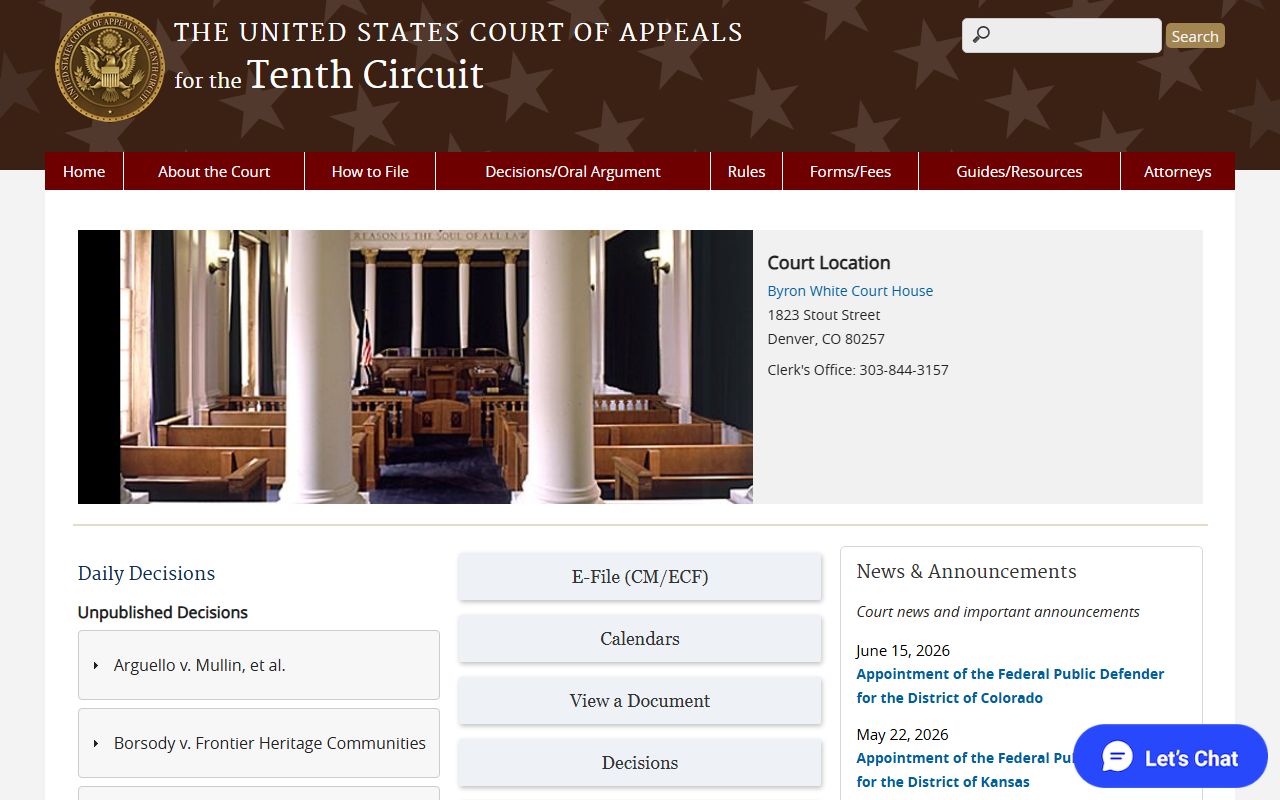
That appeals court sits well above the county District Court and handles only federal matters. A civil or criminal case from the Okfuskee County District Court never reaches the Tenth Circuit, since state appeals stay within the Oklahoma courts. The two systems do not cross.
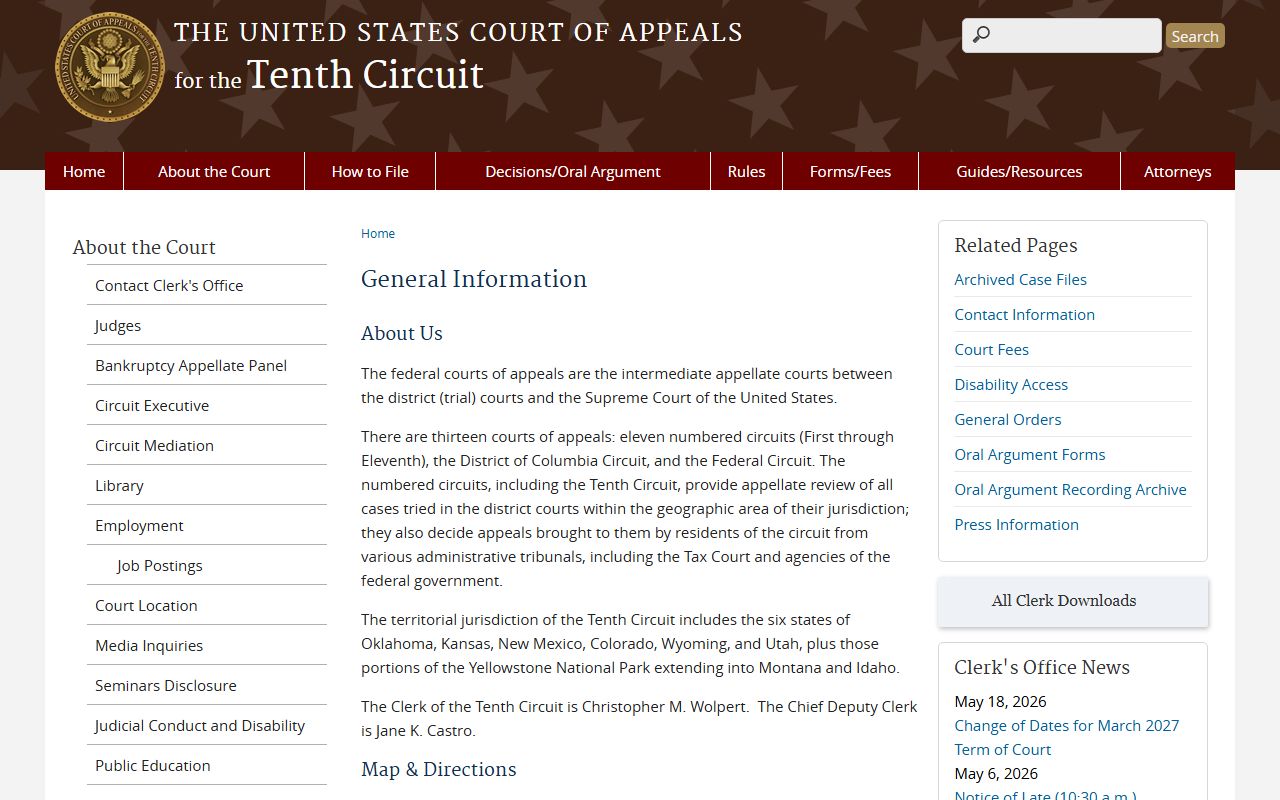
The federal appeals court also publishes the basics of how its clerk and filings work. The Tenth Circuit clerk general information page sets out its territorial reach across the region, including Oklahoma. It is a useful marker of where a federal appeal from the area belongs.
For day-to-day records, though, the Okfuskee County District Court and the Okfuskee County Court Clerk remain the right starting point. Use the federal courts only when a matter is clearly federal, and use the county court for state cases, dockets, and certified copies.