
Okfuskee County Arrest Records and Court Charges
An Okfuskee County arrest record is the record of an arrest itself: who was taken in, the agency that made the arrest, and the booking date. The sheriff and the arresting agency hold that booking side. An arrest is not a charge. The charge record begins when the prosecutor, District Attorney Max Cook for District 24, files a formal charge with the Court Clerk. That filing is what opens a court case and turns an arrest into court charges after arrest.
The two records live in different places. The arrest and booking detail, such as custody status and booking number, sit on the jail side, and the Okfuskee County inmate records page covers the jail roster and booking detail. The court charge record is what the prosecutor filed and how each charge moves through the case. The full case file, with pleas, hearings, and the final outcome, lives on the Okfuskee County criminal court records page.
How to Find Okfuskee County Arrest Records and Charges
Okfuskee County arrest records and the charges that follow are searched through the district court systems. The booking side stays with the jail, but the charges a prosecutor filed appear in the public case index. On Demand Court Records, or ODCR, lists Okfuskee as a participating court and reaches back to June 14, 1996. A name or a case number is enough to begin.
- Open the ODCR case search and choose Okfuskee as the court.
- Search by defendant name as "Last, First" or by a full case number.
- Open the case and read the charge list, where each count appears on its own line.
- Check each charge's code, level, and current status, since one can change as the case moves.
The Oklahoma State Courts Network, or OSCN, is the second path and pulls from the same district court. ODCR also lists Criminal Probable Cause and Criminal Proceedings - Not Filed as case types. Those can show the arrest-to-charge step before a formal felony or misdemeanor case is filed, which is useful when an arrest has happened but no charge has posted yet.
One caution applies to city charges. A citation written under a city ordinance can route to the Okemah Municipal Court instead of the district court, so it may not show in ODCR or OSCN at all. Booking and arrest detail are also separate from the charge record. To confirm an arrest or custody status, the sheriff or jail is the right office, while the court systems track the charges once they are filed.
How Okfuskee County Charges Get Filed After an Arrest
An arrest puts a person in custody, but a case does not open until a charging document is filed. In Okfuskee County that filing comes from the District Attorney for District 24, who covers both Creek and Okfuskee counties. Oklahoma uses three main charging documents. The one used depends on the level of the offense and how the case reaches the court.
| Complaint | Information | Indictment | |
|---|---|---|---|
| Filed By | Officer / Prosecutor | Prosecutor (District Attorney) | Grand Jury |
| Common For | Misdemeanors and first appearances | Many felonies and misdemeanors | Serious felonies |
| Starts | The case | The case | The case |
Most Okfuskee County criminal cases begin with an Information filed by the District Attorney. A grand jury indictment is the less common path and is saved for serious felony matters. Whichever document is used, the case gets a number and a charge list, and from that point the charges are part of the public court record.
Okfuskee County Charge Status and What It Means
Charges are not fixed once filed. As a case moves, a prosecutor can amend, reduce, add, or drop a charge, and a judge can dismiss one. The docket records each change with a date, so the current status may differ from the charge first filed after the arrest. Reading the latest status is the only safe way to know where a charge stands.
| Status | What It Means |
|---|---|
| Pending | The charge is filed and still active, with no final result yet. |
| Amended / Reduced | The prosecutor changes the charge, often to a lesser offense. |
| Dismissed | The court drops the charge, so it ends without a conviction. |
| Nolle Prosequi | The prosecutor declines to pursue the charge; the term is Latin for "will not prosecute." |
Charges vs. Convictions
Being charged is not the same as being convicted. A charge is only an accusation, filed on probable cause. A conviction is a finding of guilt, by plea or by verdict, proven beyond a reasonable doubt. A charge record can list counts that were dropped, dismissed, or that ended in an acquittal. The disposition line, not the charge text, tells you which is which.
| Charge | Conviction | |
|---|---|---|
| Stage | Accusation | Verdict or plea |
| Burden of Proof | Probable cause | Beyond reasonable doubt |
| Public Record | Yes | Yes |
Okfuskee County Charge Codes and Severity Levels
Each Okfuskee County charge ties to a statute. The code on the docket points to the law the State says was broken. The level of the charge tells you how serious it is. One arrest can produce several separate charges, and each gets its own code and its own status. The class of the offense also sets the case prefix on the docket.
- Felony (CF cases): the most serious class, punishable by prison time.
- Misdemeanor (CM cases): the lesser class, capped at jail time or a fine.
- Multiple counts: one arrest can yield several charges, each tracked as its own count.
The charge text on the docket usually names the offense and the statute. A count can be a felony or a misdemeanor, and the two can sit side by side in the same case. The prefix at the front of the case number, CF or CM, is the quickest read on how the State classed the lead charge.
Each count carries its own detail beyond the charge text. A public Okfuskee district court case, such as the traffic file No. TR-2025-00159, shows how a count can list the arresting agency, here the Oklahoma Highway Patrol, the arresting officer, the citation number, and the fee and cost lines tied to that count. A criminal count reads the same way. The agency that made the arrest, the officer of record, and the bond set for the count all sit alongside the charge, so a single docket can tie the arrest back to the charge the State chose to file.
Sealed vs. Expunged Records
Oklahoma law lets some people clear an eligible charge record. Two terms get mixed up: sealed and expunged. A sealed record is hidden from public view but still exists. An expunged record is treated as though it never happened. Expungement runs through the district court under 22 O.S. Sections 18 and 19, where an eligible person petitions the court, names the record, and serves the required agencies.
| Sealed | Expunged | |
|---|---|---|
| Visibility | Hidden from public | Destroyed / treated as never existed |
| Law Enforcement | Limited access | Very limited |
| Eligibility | Set by statute or court order under Title 22 | Granted by district court petition when the case qualifies under 22 O.S. 18-19 |
A dismissed charge or a charge that ended in acquittal can often qualify for expungement, but the test is set by statute. Filing and certified-copy fees should be checked with the Okfuskee County Court Clerk, since a county fee sheet was not located. Sealing changes what official systems disclose; it does not erase a case from every private site.
Note: A charge that is dropped or dismissed still appears in the court record until a sealing or expungement order is entered by the district court.
Statewide Charge and Criminal History Lookups
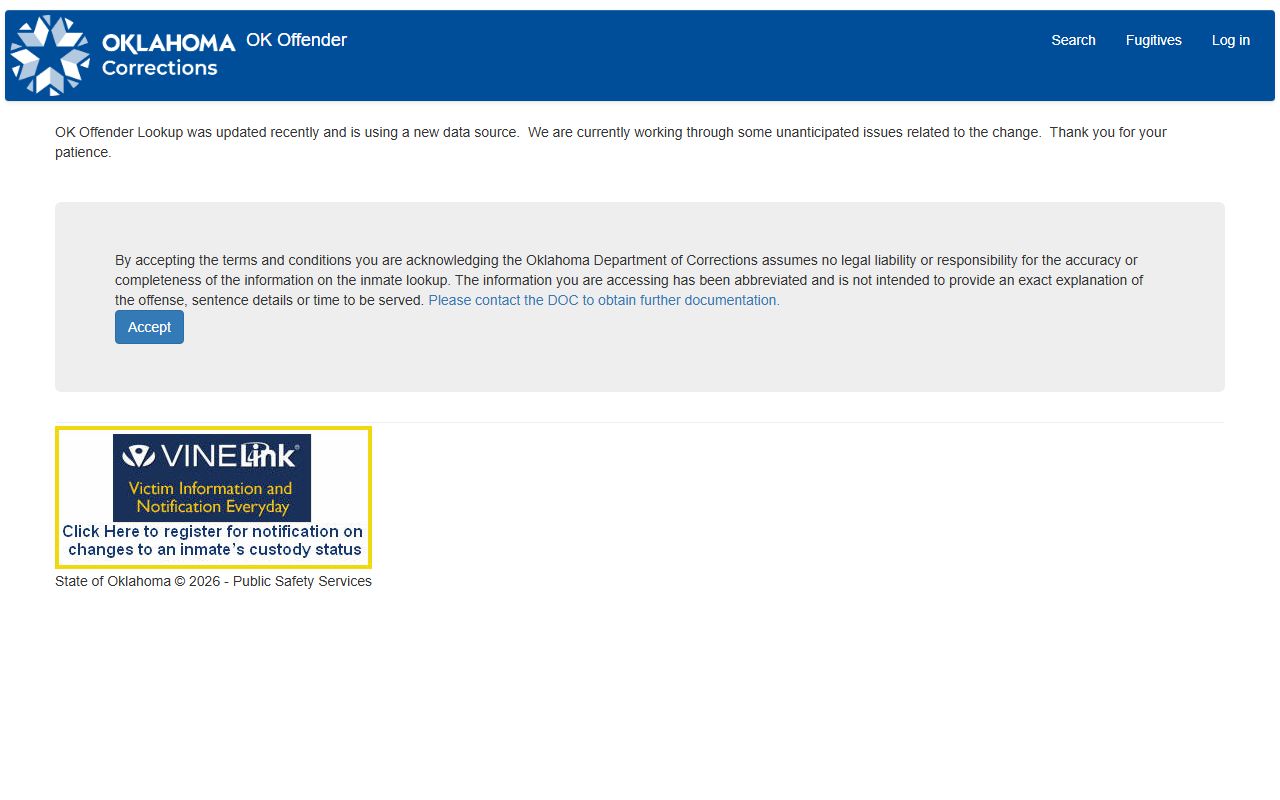
Some charges reach past the county file. A charge that ends in a state prison sentence rolls up into the Oklahoma Department of Corrections records. The DOC offender lookup shows sentenced state offenders, though the agency warns that its data is abbreviated and disclaims its accuracy and completeness. It is a status check, not a full charge file.
The lookup tool sits on the Oklahoma Department of Corrections offender lookup.
Not every charge is a state charge. Federal crimes in Okfuskee County are prosecuted in the U.S. District Court for the Eastern District of Oklahoma, not the county district court, and those charges never appear in ODCR or OSCN. The prosecutor on the federal side is the U.S. Attorney for that district.
That federal office is the U.S. Attorney for the Eastern District of Oklahoma.
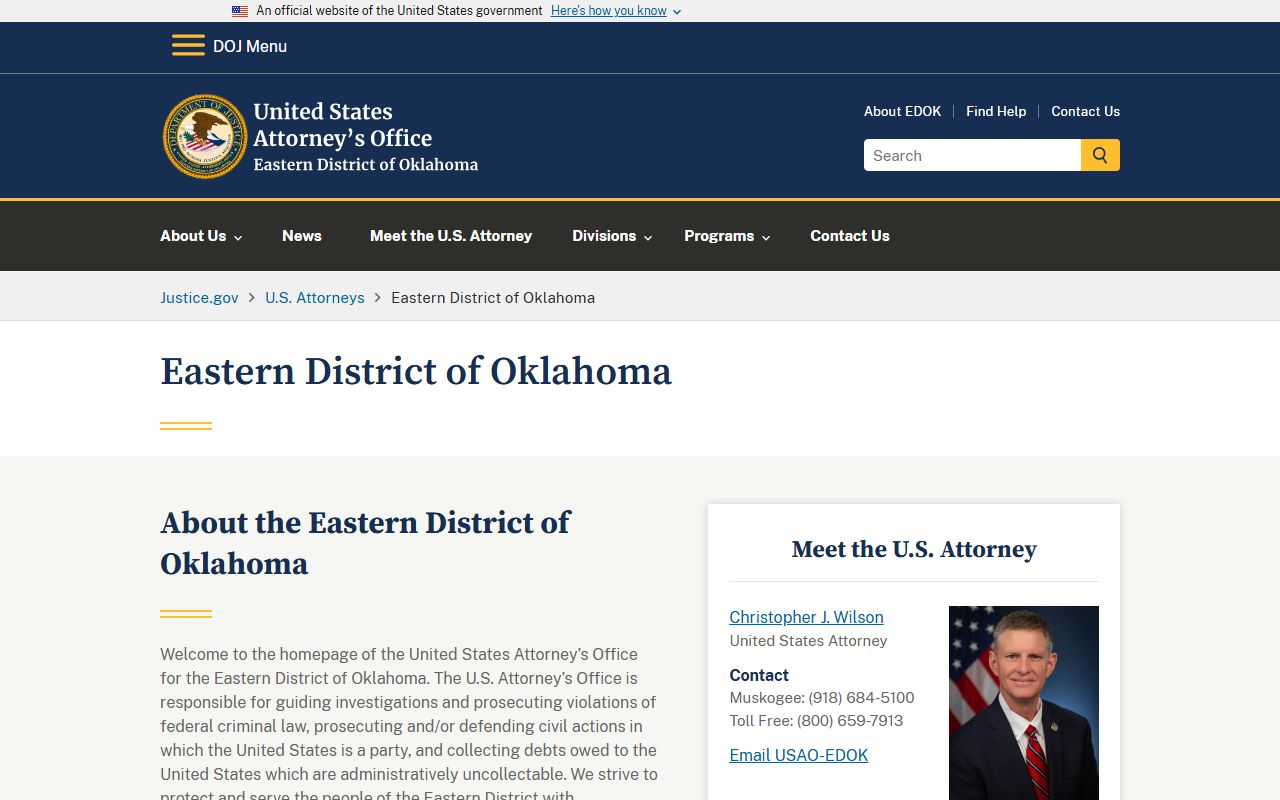
Federal charges follow their own filing process and their own records system. For a county arrest that leads to a state charge, the district court file remains the main source, and the booking detail stays with the jail.
Background Check Considerations
A charge lookup is not a regulated background check. A casual search of a court portal shows what is on the docket that day. A formal background check follows federal rules and pulls verified, dated data for hiring or housing. The two are not the same. A pending charge, a reduced charge, or a dismissed count can read very differently once the full status is checked.
Important: This site is not a consumer reporting agency under the Fair Credit Reporting Act, so its records cannot be used for credit, hiring, housing, or insurance screening.
Restricted Charge Records in Okfuskee County
Some Okfuskee County charge records are closed or limited. Juvenile charges are not open the way adult charges are, and access may require party status, attorney status, or a court order. Sealed and expunged charges drop off the public portals after a qualifying order. A dismissed charge can still be held back in some files until it is sealed. Personal identifiers, such as Social Security numbers and minor names, may be redacted under the court's filing rules.
Ongoing investigations are a further limit. Under the Oklahoma Open Records Act, certain law-enforcement records can stay closed while a case is active. When a charge is not online, the fallback is a written request or a call to the Court Clerk for court charges, or to the sheriff for arrest and booking detail. Each office can confirm whether a record is public, sealed, or withheld.